Stage 2 Breakout
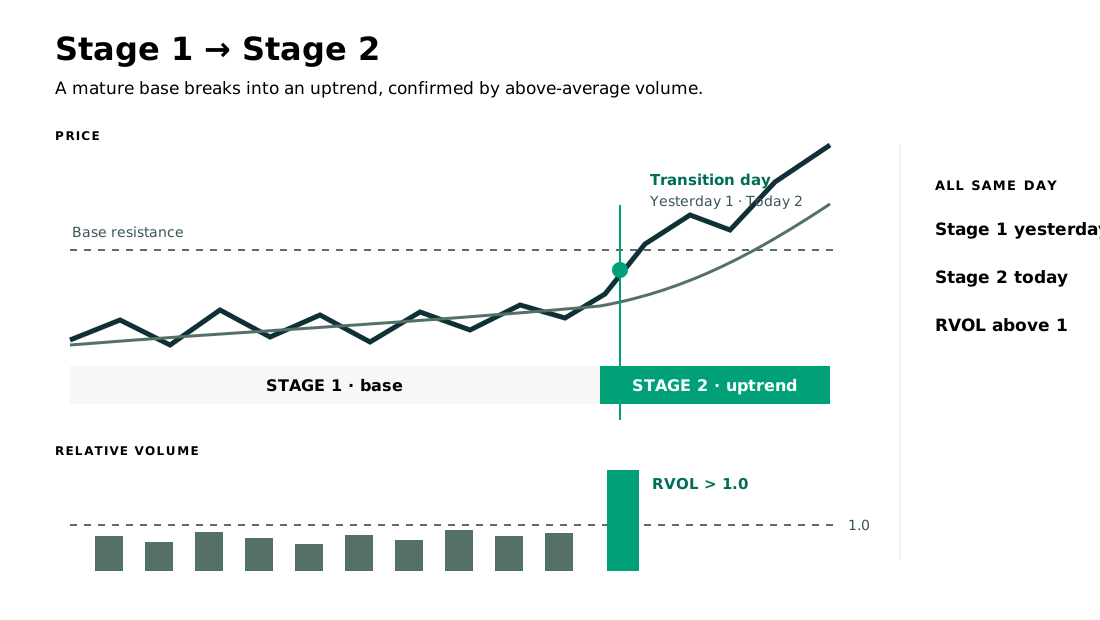
Stage 2 Breakout is a trend transition scanner. It catches the exact moment a stock moves from Weinstein's Stage 1 base into a Stage 2 uptrend. This is the transition into the strongest part of a stock's cycle, and it is traditionally the highest probability place to buy.
What it is
You met the four stages in the basics chapter. Stage 1 is the sideways base where a stock stops falling and starts building. Stage 2 is the uptrend where it makes higher highs and higher lows, and most of the money is made.
This scanner catches the transition from Stage 1 to Stage 2. The breakout out of a base into a confirmed uptrend. You are entering just as a trend begins, not after it has run a long way.
The exact rule
A stock qualifies when all of these happen on the same day:
- It was in Stage 1 the day before.
- It moved into Stage 2 today.
- Its relative volume (RVOL over 20 days) is above 1.0, meaning today's volume is above its own recent average.
The volume condition is what separates a real breakout from a false one. A breakout on above-average volume means buying is confirming the move.
Why the volume matters
The stage transition on its own is a structural event. A stock has stopped basing and started trending. But the confirmation comes from volume. When the price breaks into Stage 2 on above-average volume, institutions are buying the breakout. That is the signal with the highest probability.
This is why the scanner insists on RVOL above 1. The breakout has to be real enough to attack a new level with conviction.
Why it matters
Buying strength is easier to make money from than buying into a downtrend. Stage 2 Breakout points you at names just starting to trend, which is the moment with the most upside and the clearest risk rules.
Most of the money in any market cycle is made in Stage 2. This scanner exists to get you into Stage 2 names as early as possible, at the transition, rather than after the trend is obvious to everyone.
Why the early transition is the prize
The start of a Stage 2 is not the same as the middle of a Stage 2. Early uptrends attract a small group of committed buyers, and the price action tends to be well organized, a clean series of higher highs and higher lows. Late Stage 2 is a different animal: the weak-handed chasers and followers pile in, price gets erratic, and the stock starts spitting out traps and false swings.
That is why the transition matters so much. The scanner gets you in near the start of the uptrend, where the price action is cleanest and the committed money is driving. By the time a stock has run for weeks and everyone can see the uptrend, that early window is gone and the risk is higher.
A mature base makes it stronger
A breakout out of a base that has had time to build is a much better signal than one out of a base that barely formed. The ideal setup is a stock that has spent several weeks in Stage 1, building sideways, flattening its 30-week average, and then breaks into Stage 2 on rising volume. The base has had time to accumulate, and the selling pressure has had time to clear.
Watch for this when you open a stock. A fresh Stage 2 breakout out of a mature base with a high RS rating is a much stronger candidate than a borderline one out of a one-bar base.
How the stage tracker helps
Each company carries a stage tracker on its page. Open the company and confirm the stage before you commit. You can see the price action that defines the Stage 2 uptrend, and how long the stock has been in it. A fresh Stage 2 breakout with a high RS rating is a much stronger candidate than a marginal one.