RS 30-Day High
RS 30-Day High flags the moment a stock's relative strength rating reaches its highest level in a month. It is a leadership-peak signal. The stock is outperforming the universe more decisively than at any point in the last six weeks.
What it is
Relative strength ranks a stock against the whole universe. This scanner watches that ranking and fires when it hits a new high relative to its own recent history.
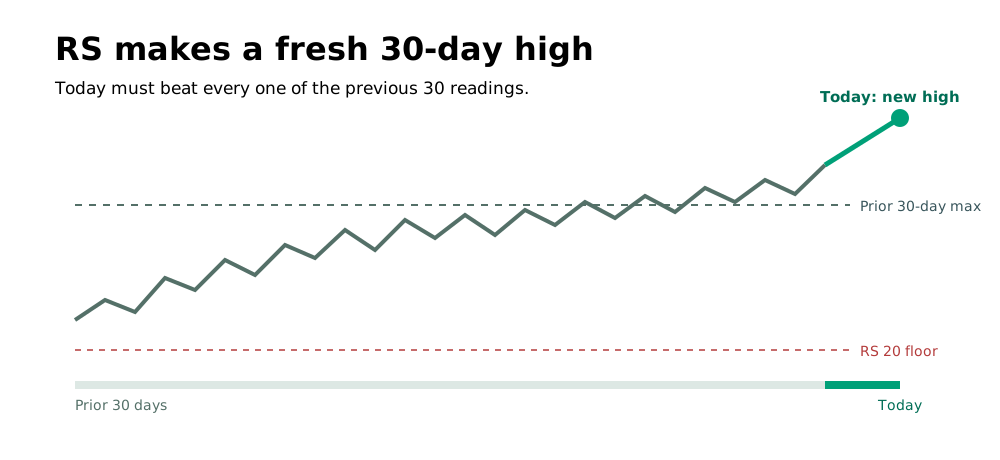
It is not about the level alone. It is about the peak. The stock's RS rating is stronger today than on any of the last 30 trading days.
The exact rule
A stock qualifies when:
- Today's RS rating is strictly higher than every one of the last 30 daily RS readings for that stock. It is making a 30-day high.
- Its RS rating is at least 20.
That last gate filters out noise. Without it, a stock whose RS climbs from 5 to 22 would look like a "high", but it is still deep in the weak zone. The floor of 20 ensures the stock has actually reached a meaningful level of strength, not just an improvement from a terrible base.
The difference from RS Crossing 80
The two RS scanners look at different things. It is worth keeping them straight.
- RS Crossing 80 fires when the RS rating crosses a fixed level, 80. It is about breaking into the top tier.
- RS 30-Day High fires when the RS rating reaches its own best level in 30 days. It is about peaking relative to itself.
A stock can make a 30-day RS high at any rating. It can even make a 30-day high at 55, if that is the strongest it has been in a month. The two signals answer different questions about strength.
Why it matters
A stock repeatedly setting RS 30-day highs is in a strong and sustained run of leadership. A stock that peaked once and faded is not.
Relative strength leadership that keeps hitting new highs is powerful evidence that money is flowing into a name. A stock that outperforms the universe more and more each week is being accumulated.
The 30-day high is a consistency signal. It is not a single good day. It is a sustained climb in the stock's rank against the market. That kind of steady improvement is exactly what a long-term investor wants to see building behind a name.
Reading it in context
An RS 30-day high is most meaningful when the stock is also in the right part of its trend:
- A stock hitting RS 30-day highs while in a Stage 2 uptrend is a confirmed leader being accumulated.
- A stock at RS 30-day high but still basing may be an early name building strength before a breakout.
Pair it with the stage to judge where in the cycle the strength is happening. And watch whether the RS high keeps extending. A stock that keeps making RS 30-day highs, week after week, is a compounding story.
Where it fits
RS 30-Day High works alongside RS Crossing 80 in the relative strength family. Both feed into Most Scan Matched.
It is also a good complement to the fundamental scanners. A stock steadily climbing the RS ranks while also guiding for strong growth has both the market and the business agreeing on it.